Brooklyn Whelan
Between the Storm & the Sublime
Written by Lara Allport
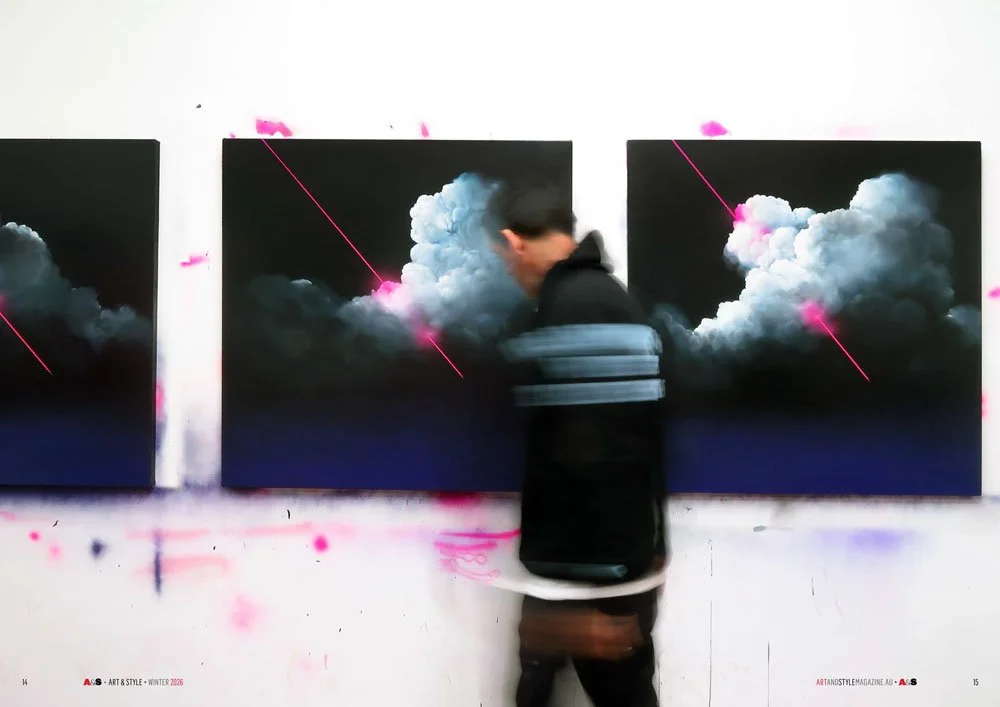
Brooklyn Whelan has spent two decades building a practice around the sky — not the pretty postcard sky, but the charged, shifting kind that makes meteorologists excited and small children run indoors. Too muscular for mere beauty, too lyrical for the purely dramatic, his cloudscapes resist easy categorisation. His work hangs in collections across New York, London and Hong Kong, with collaborators including Adidas, Samsung and Bergdorf Goodman. We sat down to talk storms, stillness, and the subconscious work of painting weather.
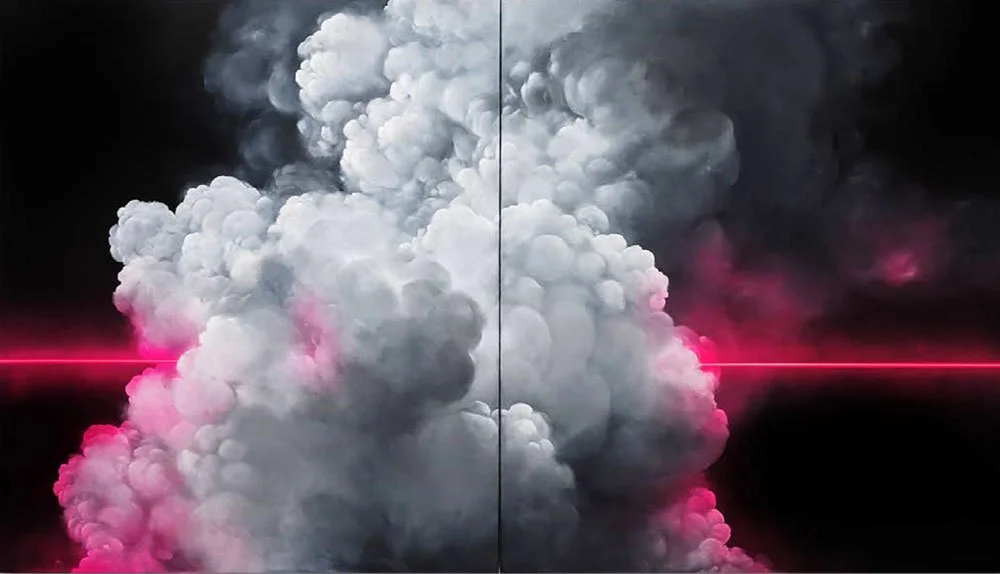
The weather is not metaphor for Whelan, or not only metaphor. It is material. His grandfather taught him to read the sky — to watch for the great Southerly Busters that roll over Sydney in summer, to understand pressure and movement and change as physical facts. “He’d race around his house preparing for them,” Whelan recalls, a trace of warmth in the description. “As a kid, it was incredibly exciting.” That childhood education in atmospheric attention translates directly into his adult practice: the paintings know what a storm system feels like from the inside, because he has been paying that kind of attention for most of his life. His graffiti background — evident in the recurring vivid colour lines that bisect his picture plane, the structural boldness of his mark- making — gives the work its other voltage. There is a street artist’s instinct for immediacy here, a knowledge that the viewer’s attention is not guaranteed and must be seized. But where graffiti works with the city as its ground, Whelan has taken that same urgency to the sky, to something far vaster and less tractable. The result, as critic Ralph Hobbs has observed, taps into the part of the imagination where ideas are most often repressed in daily life — offering release, the freedom to look beyond the rational.
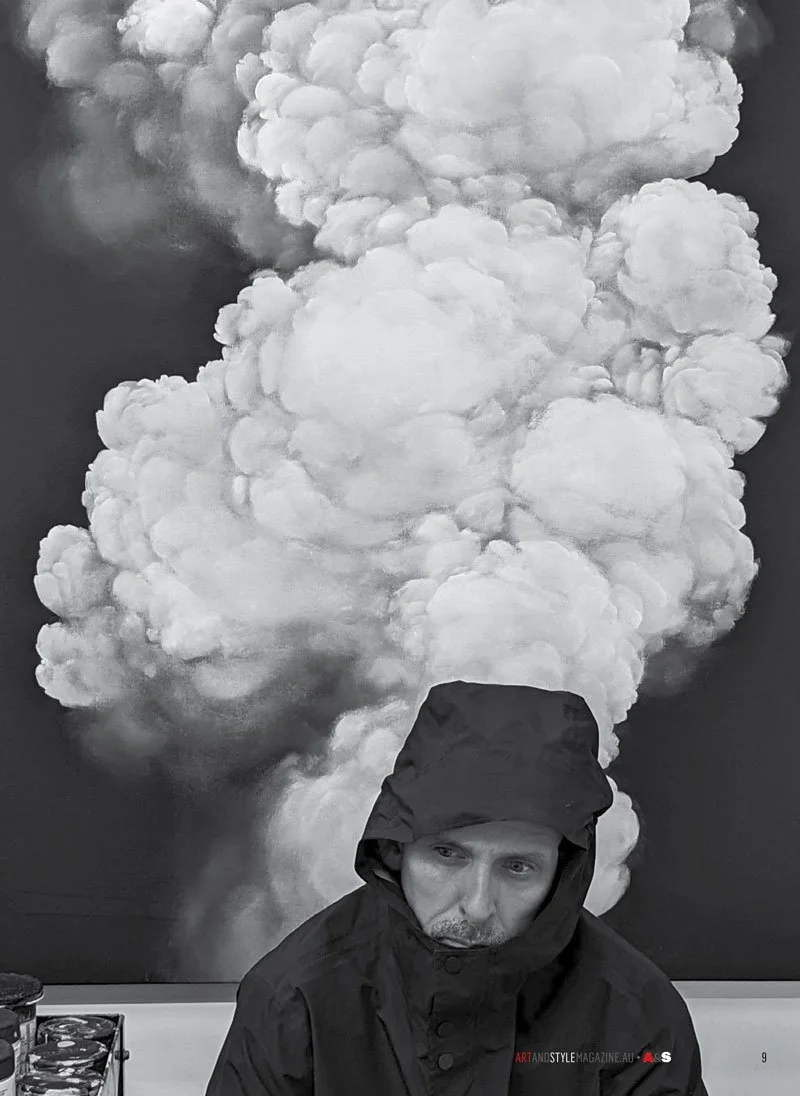
On a bright afternoon, when the Sydney light is doing its particular late-summer trick — that flat, mercurial glare before a change rolls in from the south — it feels appropriate to be thinking about Brooklyn Whelan. His paintings have always seemed to exist in that precise atmospheric liminal: not before the storm, not after it, but somewhere in the churning, electric middle. Whelan works primarily in oil and acrylic, and his subject matter — cloudscapes, storm systems, the great atmospheric theatre of weather — might read, in lesser hands, as decorative. In his, it reads as urgent. His compositions carry the compressed energy of a cumulonimbus at altitude: full of latent force, sculpted by contradictions, beautiful in the way that dangerous things so often are. “I’ve always tried to keep my paintings on the ethereal, almost abstract side,” he tells me, “but with a sense of realism that grounds them.” It is a precise and characteristic formulation — that tension between groundedness and the unbounded is the engine of everything he makes. His newer works push further into landscape formats, though the essential quality remains: you are never quite sure whether you are looking at something real or something remembered, something observed or something dreamed.
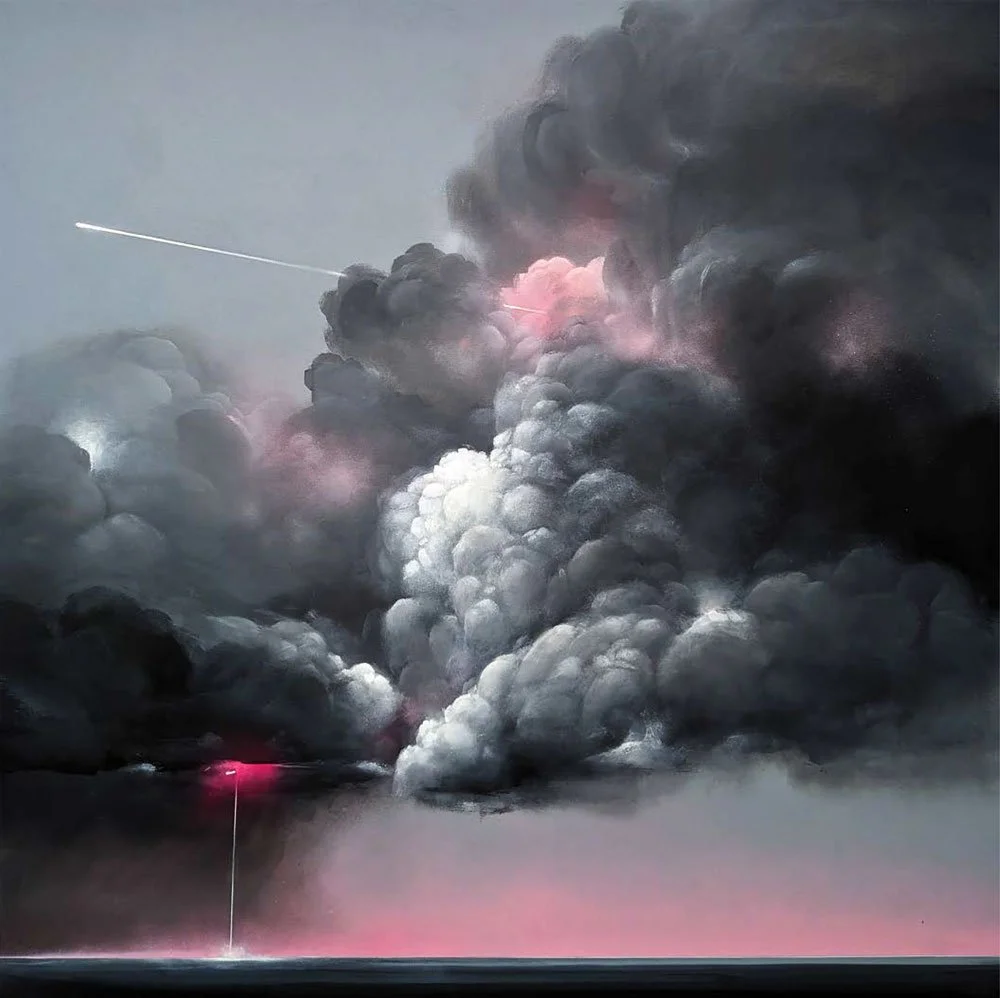
That release operates differently depending on where Whelan finds himself emotionally. “It really comes down to mood and tempo,” he says, describing the balance between the bold, explosive gestures and the quieter, more delicate passages that characterise his work. “Sometimes I slow right down, and that’s when a certain calm enters the work. Other times, I’m channelling more aggression and movement — like a storm. That storm probably is me.” It is the most candid thing he says, and also, somehow, the most illuminating. The weather is not just his subject. It is his psychological vocabulary.
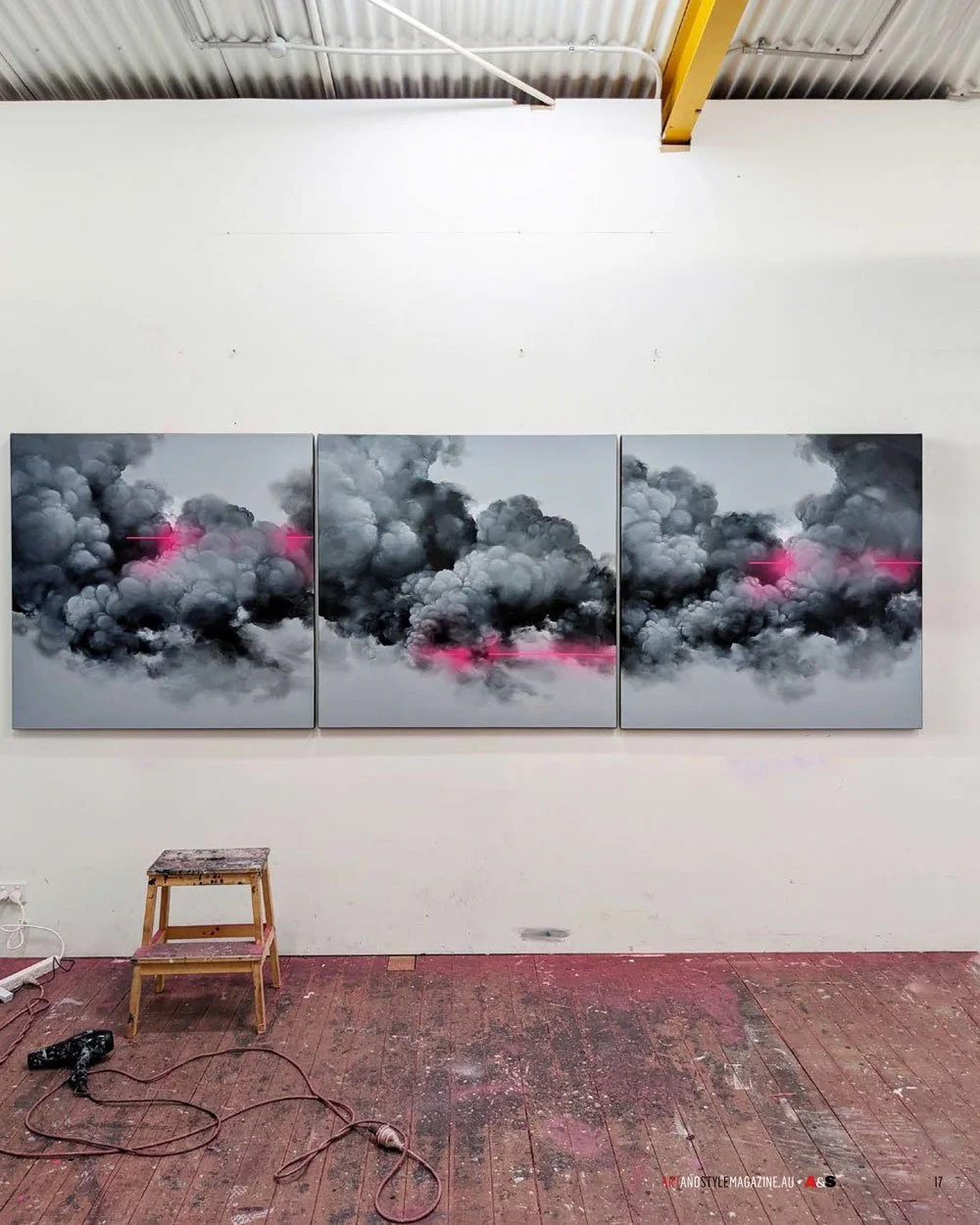
He cites futurism, graffiti, and science fiction as touchstones — a visual library accumulated over years, filed somewhere between memory and instinct. “It’s a subconscious process that still feels a bit mysterious to me,” he admits. “I’ve stored away countless images, and somehow they start to link together, forming their own visual logic.” This is, in fact, exactly what one notices when spending time with his work: the sense that the paintings have arrived at their own internal grammar, a language in which neon laser lines and atmospheric churn are not incongruous but inevitable.
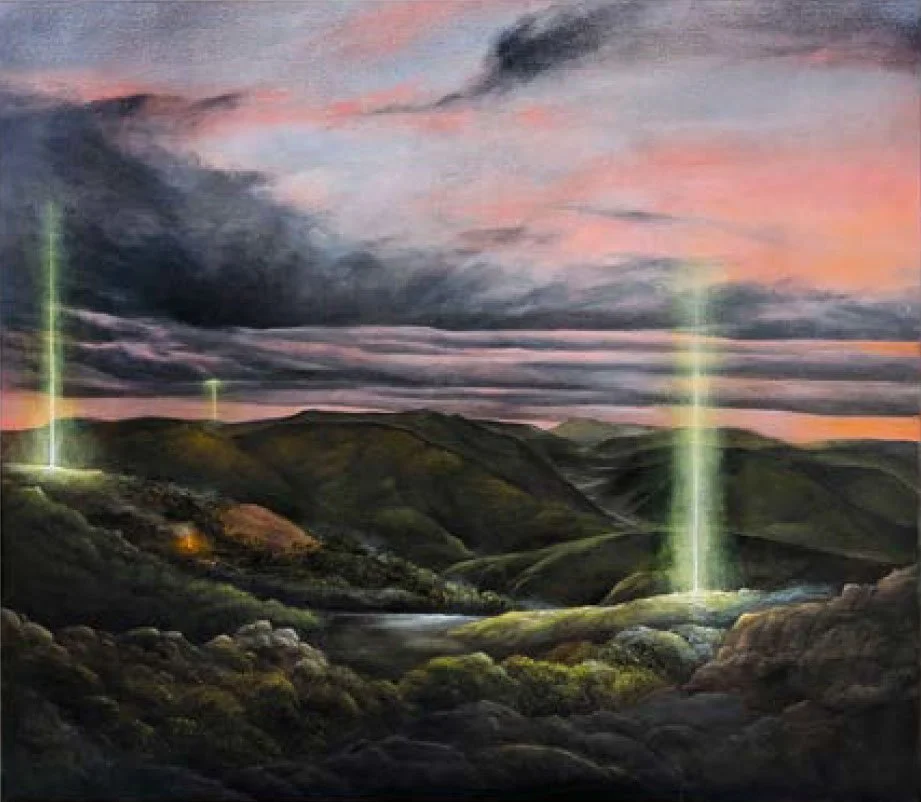
Whelan’s career has been international almost from the outset — with solo shows at London’s Nelly Duff Gallery, representation in Atlanta and Miami, and group exhibitions from Singapore to Hong Kong — but he is clear that the pivotal moment came closer to home. “That tipping point came right after my first show here in Australia,” he says. “It had been a long time coming, but it was the first time my work reached beyond my immediate circle. That exposure created a ripple effect.” The galleries he connected with then, he notes, are largely still his galleries now.
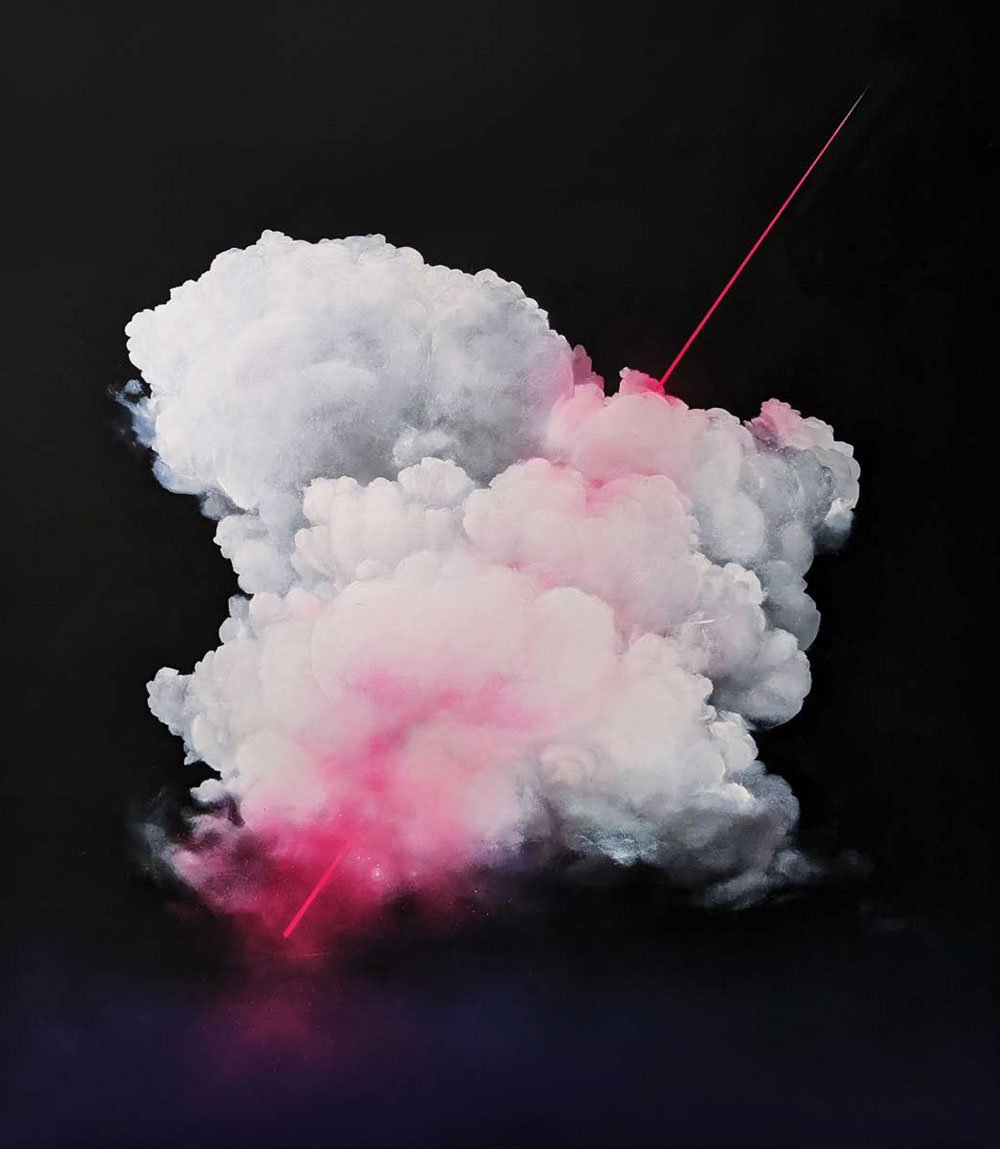
These days, he is deliberately slowing the exhibition pace — a response, in part, to what he describes as the current instability of the art market, but also, one suspects, a deeper creative restlessness. “I’ve slowed down on shows because I haven’t been enjoying the pressure,” he says. “The upside is that it’s giving me time to experiment more in the studio.” For an artist whose practice has always been about reading what the atmosphere is doing and responding accordingly, it sounds less like retreat than like the quiet before something significant. A pressure system building, just out of view. Brooklyn Whelan’s work is represented by Nanda\Hobbs Gallery, Sydney, and ABV Gallery, Atlanta. Selected works are available at brooklynwhelan.com
@brooklynwhelan