Audrey Kawasaki
Written in the Grain
The Art of Audrey Kawasaki
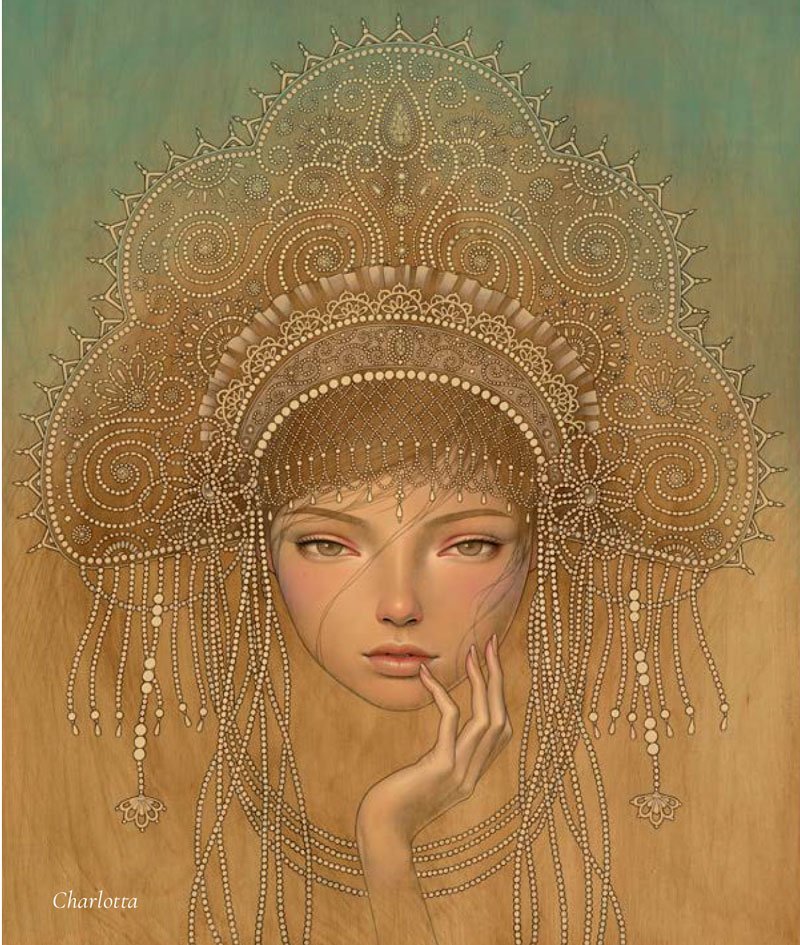
Audrey Kawasaki is one of the most recognisable painters working in contemporary figurative art today. Born in Los Angeles in 1982, her oil paintings on wood panel, young women rendered in a language that fuses Art Nouveau, Japanese manga and the lineage of Klimt and Schiele, have earned her an international following since she began exhibiting professionally in 2005. The wood grain is not incidental to the work; it is woven into it, the warmth and pattern of the surface merging with the image to give the paintings their particular quality of antique timelessness. Her figures are simultaneously innocent and knowing, beautiful and unsettling, always somewhere in between.
We spoke with Audrey about the scrapbooks that shaped her, the alleyway accident that gave her a surface, and what fearless expression means after years of editing herself.
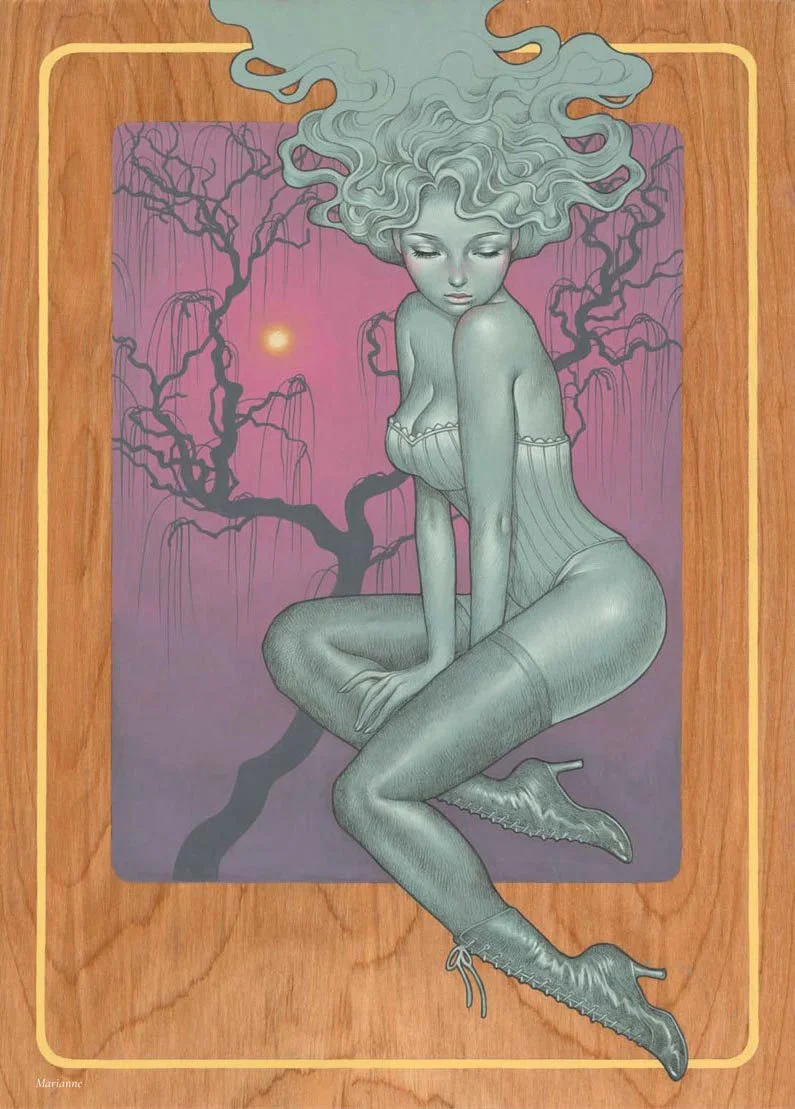
Marianne
There is a word that comes up repeatedly when people describe Audrey Kawasaki’s paintings: ‘in-between.’ In-between innocence and something more knowing. In-between the representational and the decorative. In-between the figure and the surface she is painted onto, the wood grain rising through the image like a memory that refuses to be covered. It is a quality that Audrey has been working towards, consciously or not, since she was a teenager cutting images out of magazines and pasting them into scrapbooks, before the internet existed as a reference tool, when finding images required physical attention and a pair of scissors.