Gino Campagnaro
Between sun, surf & painted space
Some paintings feel like memories you cannot quite place. Built from colour, atmosphere and suggestion, these works invite the viewer into a liminal world where story lingers, and instinct decides when enough is enough.
Writer: Lara Allport
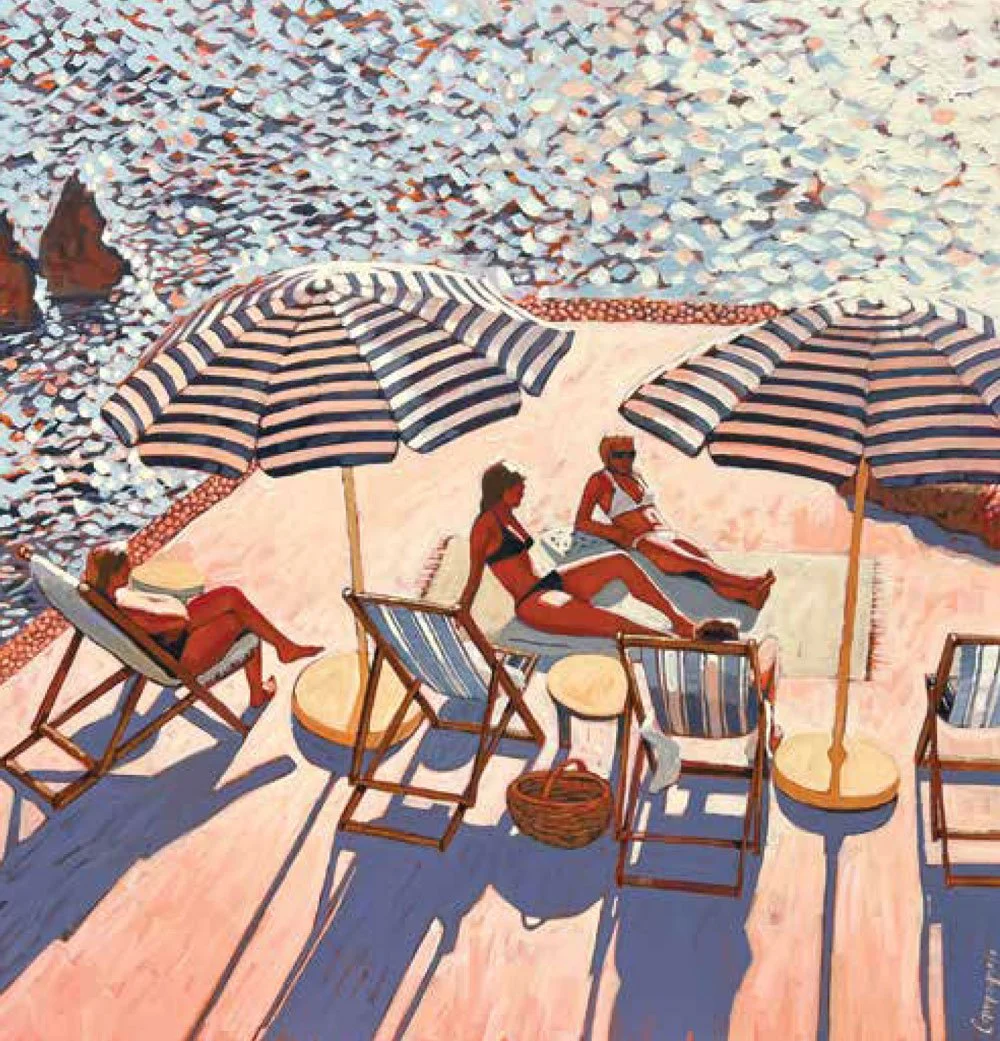
Gino Campagnaro is an Australian-born contemporary artist whose vibrant paintings and giclée prints capture the laid-back elegance of coastal living. There is a quiet certainty in this artist’s paintings. They appear composed and controlled, yet never rigid. Instead, they hold a sense of ease, as though they arrived naturally. That balance between intuition and deliberation sits at the heart of the practice, and it begins with a simple question: how do you know when a work is finished? “Honestly? When it looks right,” Gino says. “That sounds simple, but over time you learn to trust your instincts.” Like many creatives, the early years were marked by hesitation. “Early on, you tend to doubt yourself and second-guess every decision. But once you truly understand your vision, your style, your intention, the feeling you’re aiming for, the painting tells you when it’s complete.” It is a philosophy grounded in experience, and in a life that has unfolded gradually into art. The creative impulse was present from the beginning.
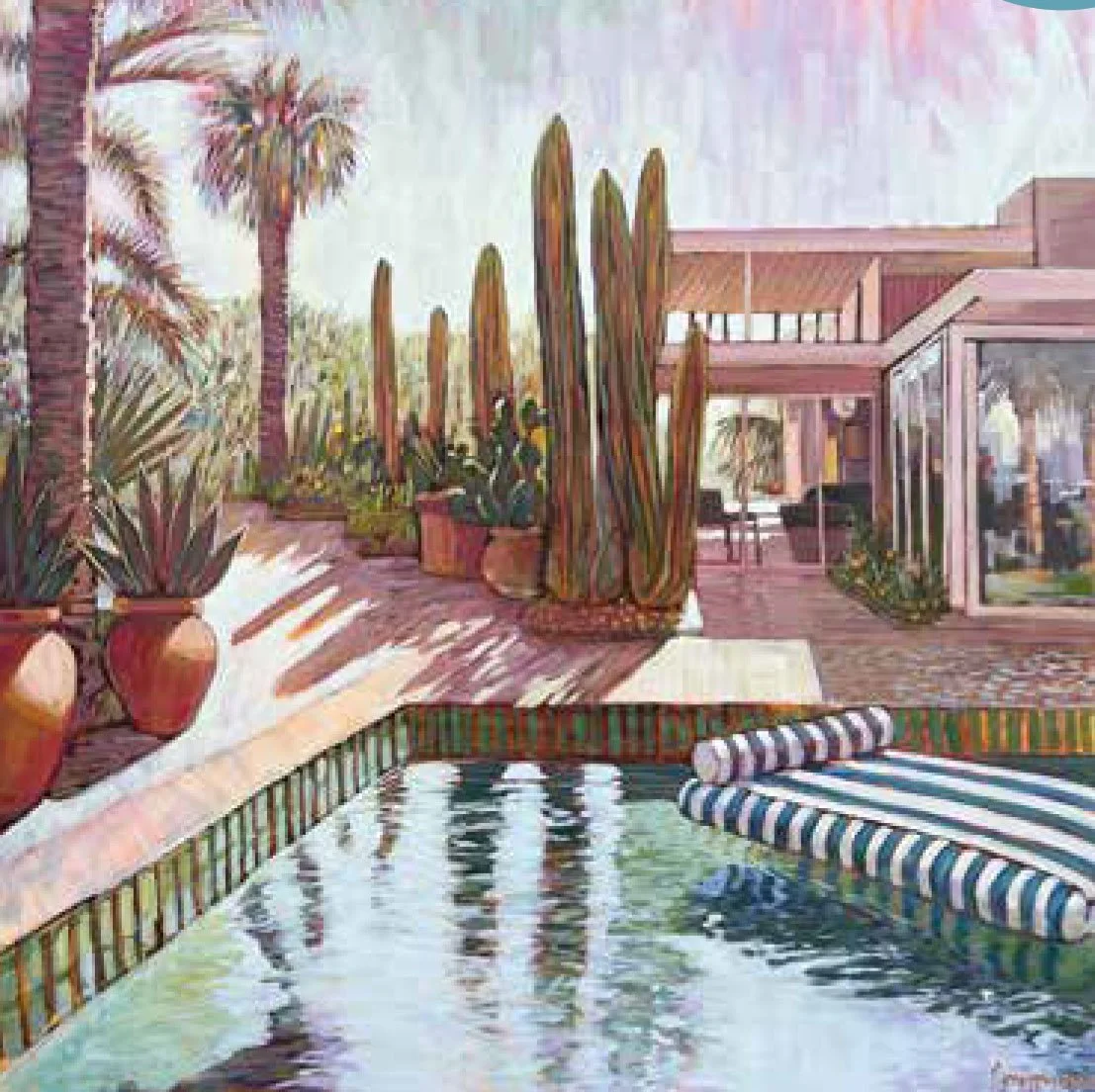
At eight years old, Gino was already selling charcoal drawings of old buildings. Painting arrived later, at eighteen, and early recognition followed. A self-portrait prize in Wollongong, where Gino grew up, led to the work hanging in the courthouse for several years. Still, the path towards full-time painting was not immediate. In his twenties, Gino moved to Sydney, drawn to the creative world of graphic art and art direction. A long career followed, spent largely as a Creative Director. Painting remained close, but never fully resolved. “It felt like a work in progress,” Gino reflects. “I was still searching for my true style and subject.” The turning point came in 2019, in a moment that initially felt like catastrophe. Redundancy, followed by the disruption of COVID, shifted everything. “Finding work at fifty became increasingly difficult,” Gino says. Instead of returning to corporate life, he chose to invest fully in painting. That decision opened a period of intensive exploration, sparked by a trip to Palm Springs in 2018. The mid-century architecture, desert tones and light became a catalyst. For a year, Gino worked to develop a new visual language. When he finally approached a gallery in Woollahra, he did it the old-fashioned way, walking in with the work. The owner’s response was blunt but pivotal. He disliked half of the paintings, but loved the Palm Springs-inspired pieces. He took them, sold them to a collector, and Gino’s direction became clear.
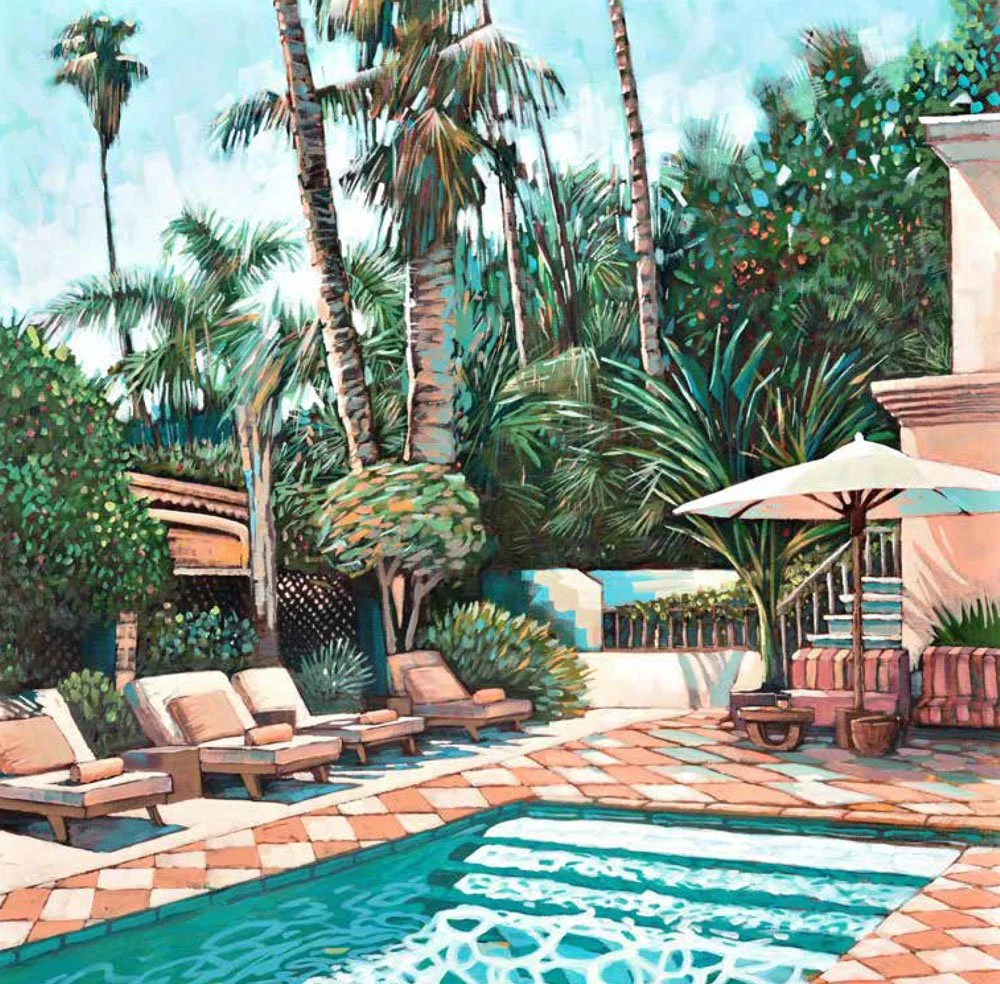
Over the past four years, that style has continued to evolve. The early boldness remains in the colour blocking and compositional structure, but the work has grown more painterly, with subtle layers and texture that reward time and attention.
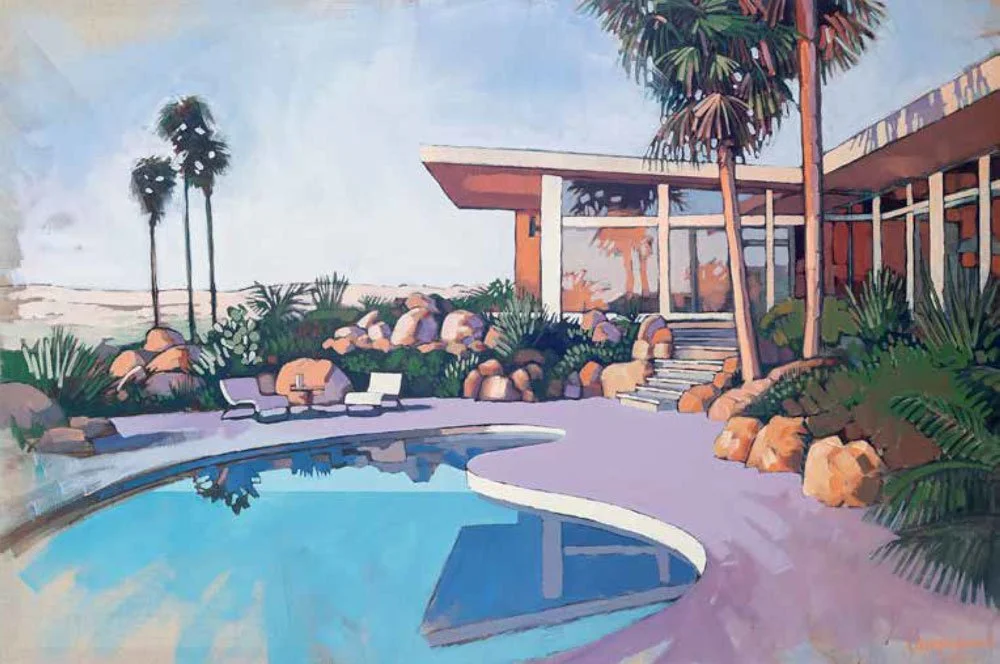
Today, Gino’s studio is based in Adelaide, and a recent shift into a larger, more workable space has brought renewed momentum. “Larger, with air conditioning and room to move,” Gino says. “That physical freedom makes a difference.” Yet the deeper requirement is internal. “Ultimately, it doesn’t matter where you live. You can paint anywhere, as long as your mind feels free to expand and create.” For Gino, quieter environments offer clarity. Big cities can distract. The paintings themselves reflect that sense of pause. They are filled with atmosphere, memory, and spaces that feel both familiar and invented. Some works begin with real places visited, but increasingly imagination leads. “I create spaces I would like to inhabit, places that feel like an escape,” Gino explains. He is drawn to the liminal, those in-between moments where something has happened or might happen. The narrative is never literal. Instead, it is implied. “I like the viewer to feel a quiet narrative, without it being spelled out too literally. It’s about atmosphere, suggestion, and possibility. Like something is just about to happen.”
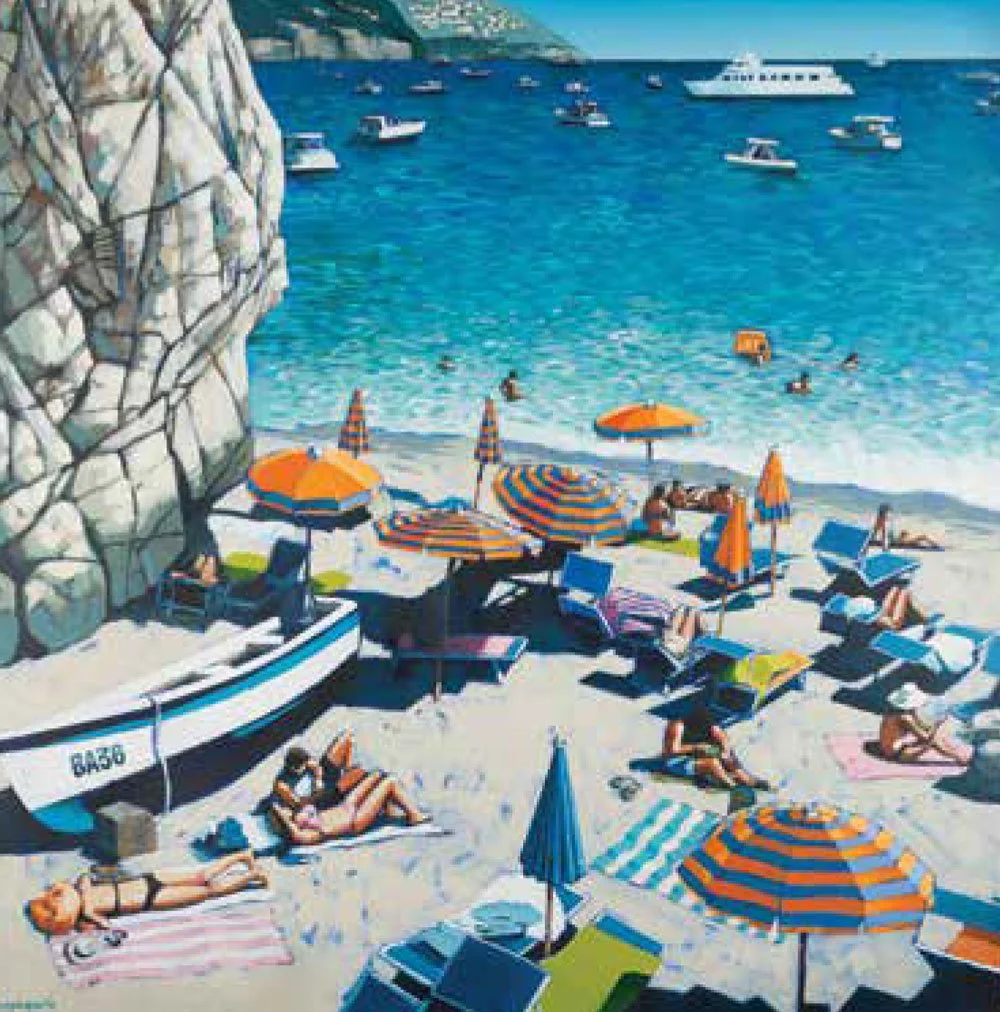
Colour is equally essential, often decided before the subject itself. “I rarely paint real colours,” Gino says. “Instead, I try to reinterpret tones, painting in light rather than literal colour representation.” Beneath the measured compositions lie layers of paint and underpainting that subtly reveal themselves over time. But it is the emotional register that endures. There is a serenity in the work that feels restorative. Stand before one long enough and you begin to feel lighter, steadier, quietly optimistic. They remind us that stillness can be powerful, and that within calm, possibility waits.